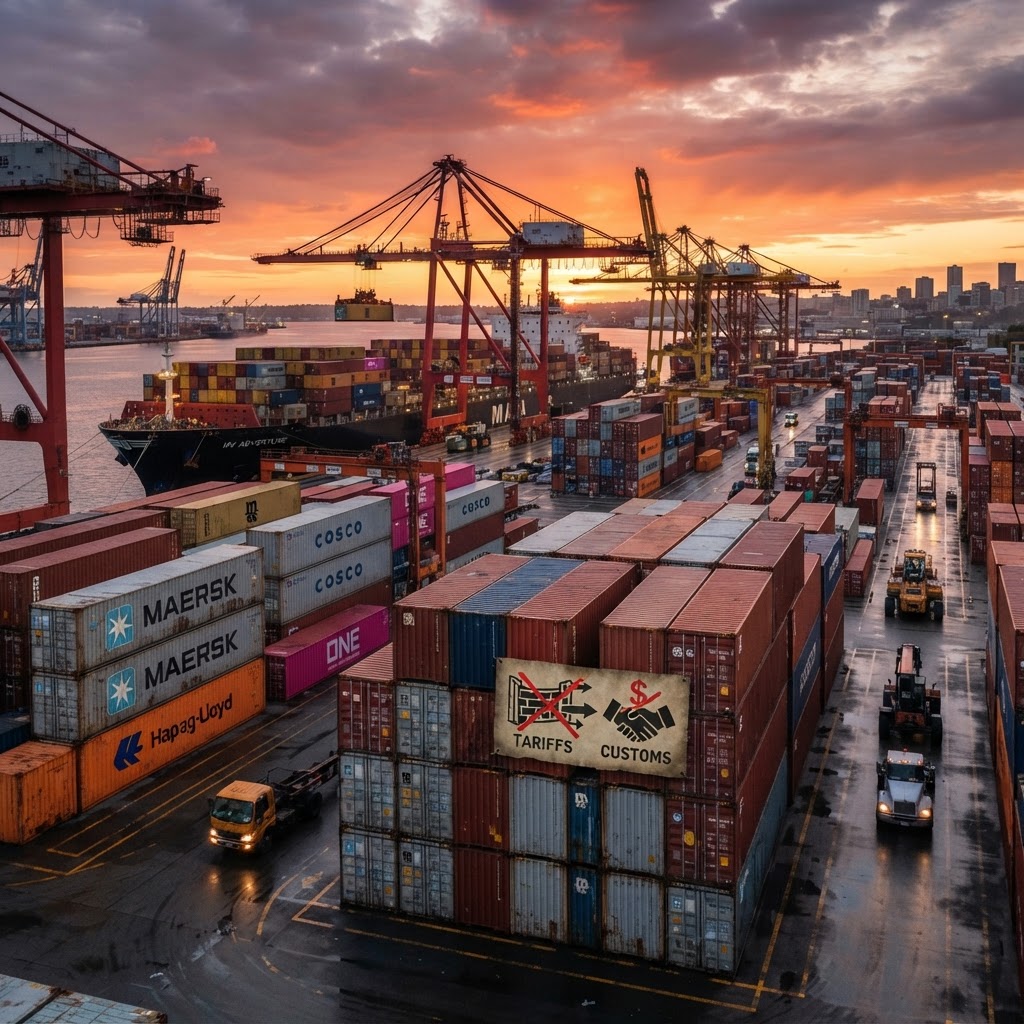
Trump's 2025 Tariffs: the biggest trade shock since the Great Depression
How the April 2, 2025 universal tariff announcement created the third-largest stock crash in 3 days in American history
On April 2, 2025, Trump announced universal 10% tariffs and specific tariffs up to 54% on China. The S&P 500 lost 10% in 2 days — the third-worst 3-day crash in American history.
Liberation Day
On April 2, 2025, Trump called the day "Liberation Day" and announced the most radical tariff system since the 1930s:
- Universal 10% tariffs on all imports
- "Reciprocal" tariffs calculated as half of each country's trade surplus: China 34% additional (total ~54%), EU 20%, Japan 24%, Vietnam 46%
The market crash
The S&P 500 lost 4.8% on April 3 and another 5.97% on April 4 — a total of -10.5% in two trading days. It was the third-largest 3-day crash in American history, after the 2020 COVID crash and the 1987 Black Monday.
The VIX (fear index) shot above 45 — levels seen only in 2008, 2020, and 2022.
The pause and negotiations
On April 9, Trump announced a "90-day pause" on reciprocal tariffs (keeping those on China). Markets rebounded 9.5% in one day — the largest rally since 2008. The trade war turned into negotiations.
- Trade tariffs increase prices for consumers in the country that imposes them: China tariffs translate into higher prices for Americans.
- Policy uncertainty is a real economic cost: companies don't invest when they don't know what tariffs will be in 6 months.
- Markets price certainty, not direction: the April 9 pause was welcomed with huge rallies — not because tariffs were removed, but because uncertainty was reduced.