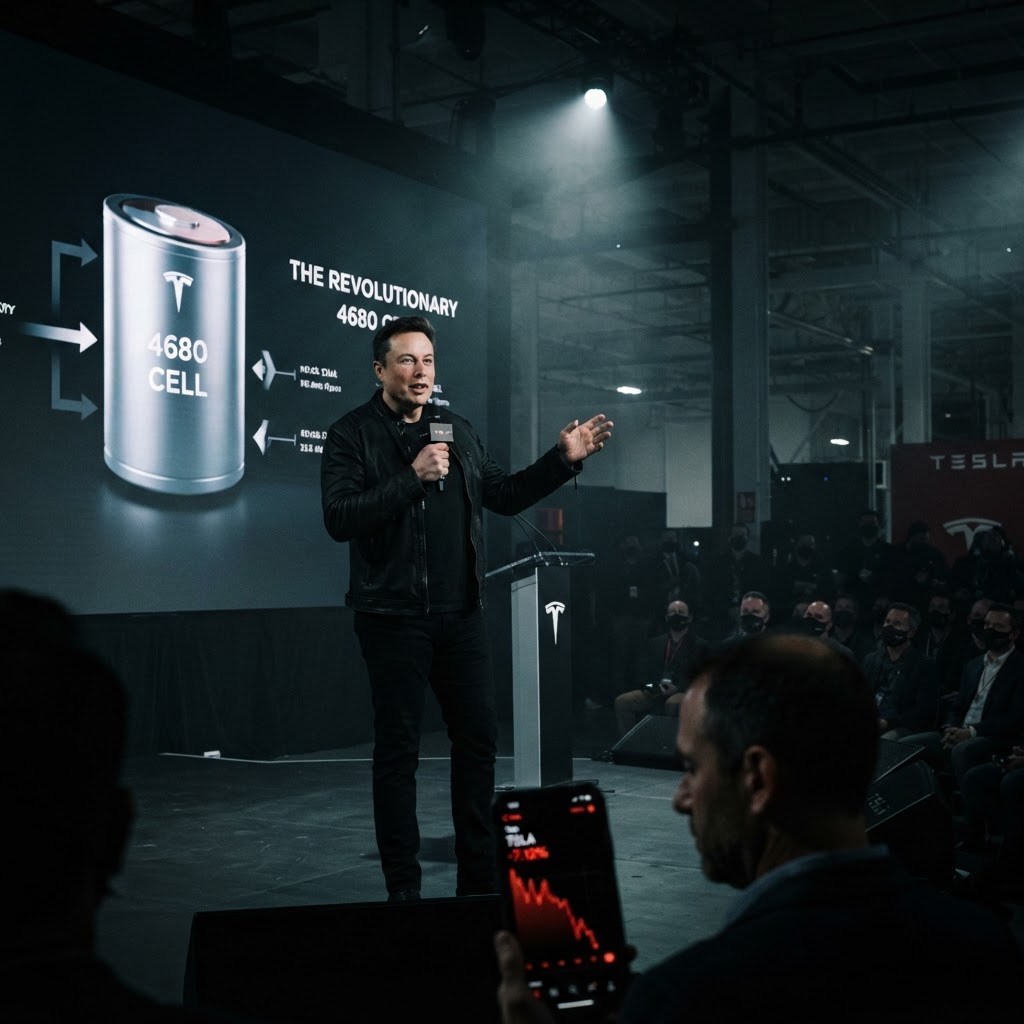
Tesla Battery Day 2020: when excessive expectations punish even good news
How the most anticipated EV event of 2020 disappointed expectations and caused a -7% crash despite revolutionary announcements
On September 22, 2020, Tesla announced revolutionary batteries that would reduce costs by 56%. The stock fell 7% — because the market expected more. A lesson in expectation management.
The pre-Battery Day hype
In the months leading up to the September 2020 Battery Day, Elon Musk had fueled exceptional expectations on social media. The market expected the announcement of a "million-mile battery," 80% cost reductions, and perhaps a revolutionary new production platform. Tesla stock had already anticipated a lot in 2020 (+400% YTD).
The real announcements
On September 22, 2020, Tesla announced:
- kWh costs reduced 56% in the next 3 years
- New 4680 battery with 54% increased range
- Structural integration of the battery into the car
- Goal: $25,000 car within 3 years
These were revolutionary announcements. The stock fell 7%.
The "buy the rumor, sell the news" lesson
Battery Day was a classic case of "buy the rumor, sell the news." Expectations were so high that even extraordinary announcements disappointed. Those who had bought Tesla anticipating the event had already cashed in gains before the announcement.
- Prices incorporate expectations, not reality: Tesla had already risen 400% — the event was already priced in.
- "Buy the rumor, sell the news" is one of the most recurring patterns in markets: it applies to corporate events, central bank announcements, quarterly results.
- Unreasonable expectations punish even good news: when the market expects a miracle, very good disappoints.