Roosevelt's New Deal 1933: how the state reinvented American capitalism
How Franklin Roosevelt responded to the Great Crash with the most radical expansion of the American federal state in history
Between 1933 and 1938, Roosevelt implemented the New Deal: 15 laws in 100 days, SEC, FDIC, Social Security. He redesigned the role of the state in the capitalist economy.
America in 1933
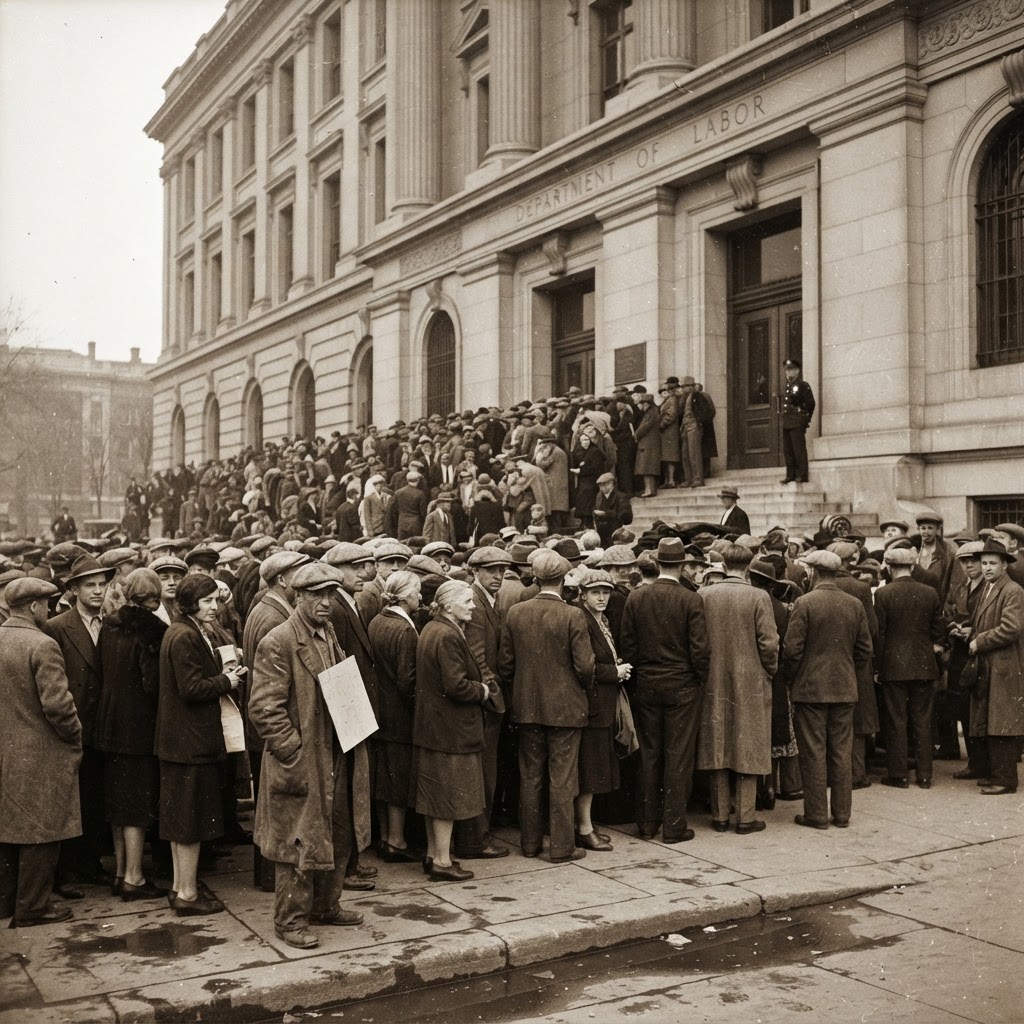
When Roosevelt took power on March 4, 1933, America was on the brink of collapse: 25% unemployment, GDP had fallen 30% from 1929, thousands of banks had closed, millions of Americans were in poverty. The capitalist system seemed to have failed.
The first 100 days
Roosevelt acted with unprecedented speed. In the first 100 days he passed 15 fundamental laws:
- Emergency Banking Act: closed banks for a week to stop withdrawals
- Glass-Steagall Act: separated commercial banks from investment banks
- Securities Act 1933 and Securities Exchange Act 1934: created the SEC to regulate markets
- FDIC: guaranteed bank deposits up to $5,000
The lasting legacy
The SEC (Securities and Exchange Commission) and FDIC (Federal Deposit Insurance Corporation) still exist today. The Glass-Steagall separation lasted until 1999. The New Deal permanently redesigned the relationship between state and markets in America.
- Crises create space for radical reforms: the New Deal was possible only because the crisis was so deep.
- Market regulation is always born after crises: the SEC was born after 1929, Dodd-Frank after 2008.
- The commercial/investment bank separation reduces systemic risk: its abolition in 1999 contributed to the 2008 crisis.