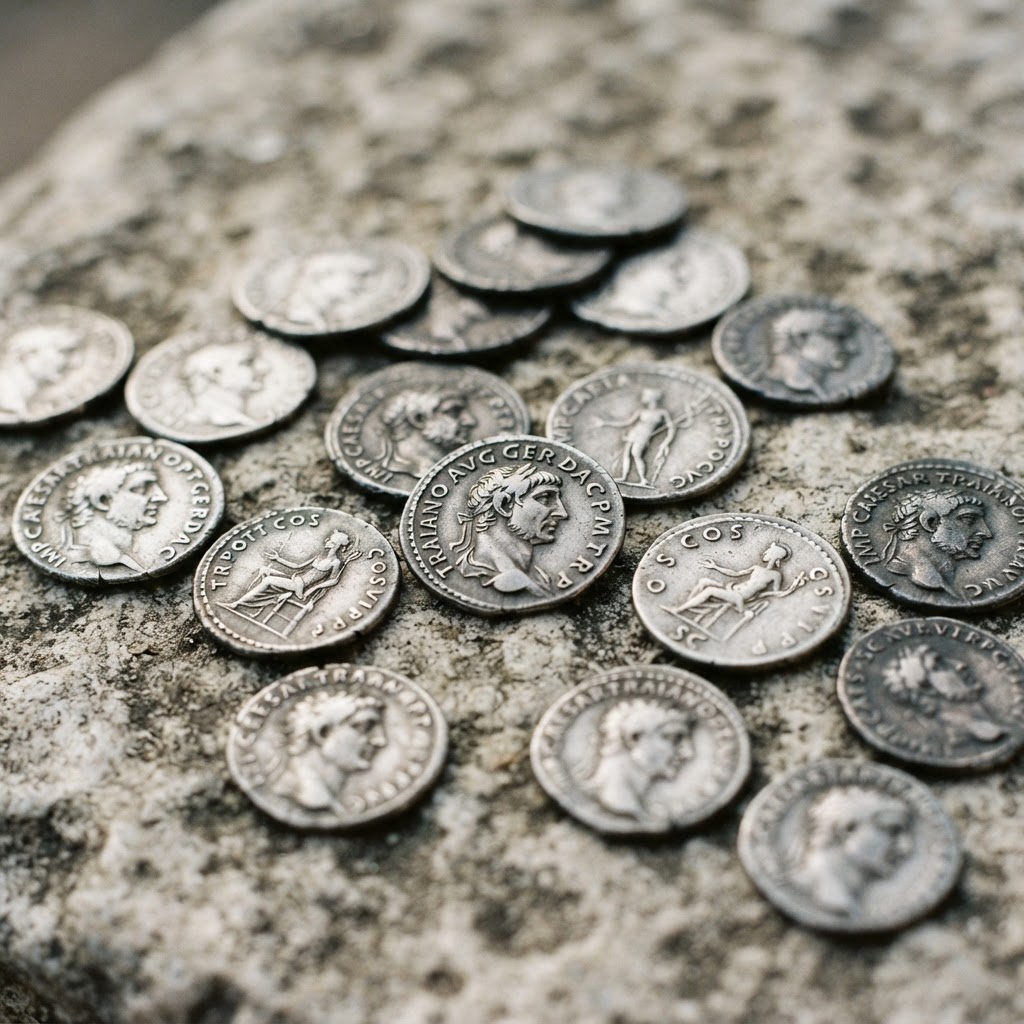
The Debasement of the Roman Denarius 200-270 AD: the first documented hyperinflation
How Roman emperors reduced the silver content of the denarius from 100% to 2% in 70 years — and destroyed the empire's economy
Between 200 and 270 AD, the silver content of the denarius fell from 50% to 2%. Prices increased 1000%. It was the first documented hyperinflationary crisis in history.
The original denarius
The Roman denarius was introduced in 211 BC as a nearly pure silver coin. For centuries it was the symbol of the empire's monetary stability — traded throughout the Mediterranean as the reserve currency of antiquity.
The progressive debasement
To finance wars, armies, and growing bureaucracy, 3rd century emperors began reducing the silver content of coins. Septimius Severus brought it to 50%, Caracalla to 43%, down to 2-5% in the era of military anarchy (235-284 AD).
Roman citizens were far from stupid: they understood the new coins weren't worth as much as the old ones. Prices exploded — papyrus documents from Roman Egypt show price increases of 1000% in a few decades.
The modern parallel
What Rome did physically with silver in coins, modern central banks do virtually by increasing the money supply. The difference is transparency: today we have inflation targets and independent central banks. Rome only had emperors with liquidity problems.
- Money is trust: when citizens realized the denarius was almost copper, they stopped trusting it.
- Inflation is a hidden tax: reducing silver content implicitly taxed those who held savings.
- Currency debasement accelerates economic decline: Roman hyperinflation contributed to the 3rd century crisis.