The Grain Crisis in Rome 123 BC: the first controlled price policy
How Gaius Gracchus introduced fixed grain prices and created a state dependency that lasted 600 years
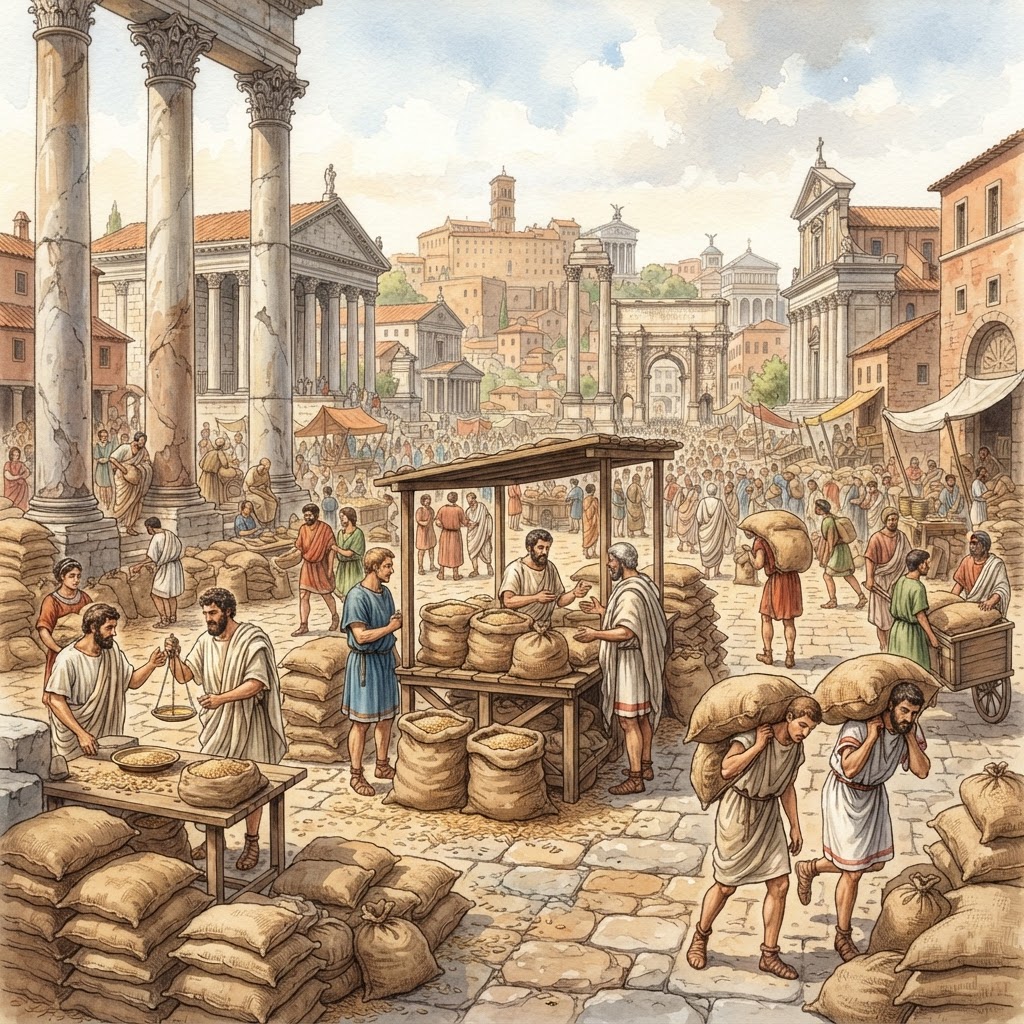
In 123 BC, Gaius Gracchus imposed the Lex Frumentaria: the state sold grain at a fixed price. It was the first food subsidy policy in history — with consequences that lasted until the fall of Rome.
The supply problem
In 2nd century BC Rome, the concentration of land in the hands of large landowners (latifundists) was pushing small farmers toward the city. Rome was growing, but its ability to feed the population depended on increasingly fragile imports from Africa and Sicily.
The Lex Frumentaria
In 123 BC, the tribune Gaius Gracchus proposed and passed the Lex Frumentaria: the state would sell grain to Roman citizens at a fixed price — about half the market price. It was the first state food subsidy in Western history.
It worked in the short term: the urban poor were fed. But it created dependency: removing the subsidy was politically impossible. Over the centuries, Rome spent growing amounts of resources on the "frumentum".
Timeless economic lessons
- Price controls distort markets: the fixed price reduced the incentive to produce grain in Italy, increasing dependence on imports.
- Subsidies create political dependency: no Roman politician ever managed to abolish free distribution — it was political suicide.
- Short-term policies have long-term costs: the Lex Frumentaria contributed to the decline of Italian agriculture for centuries.