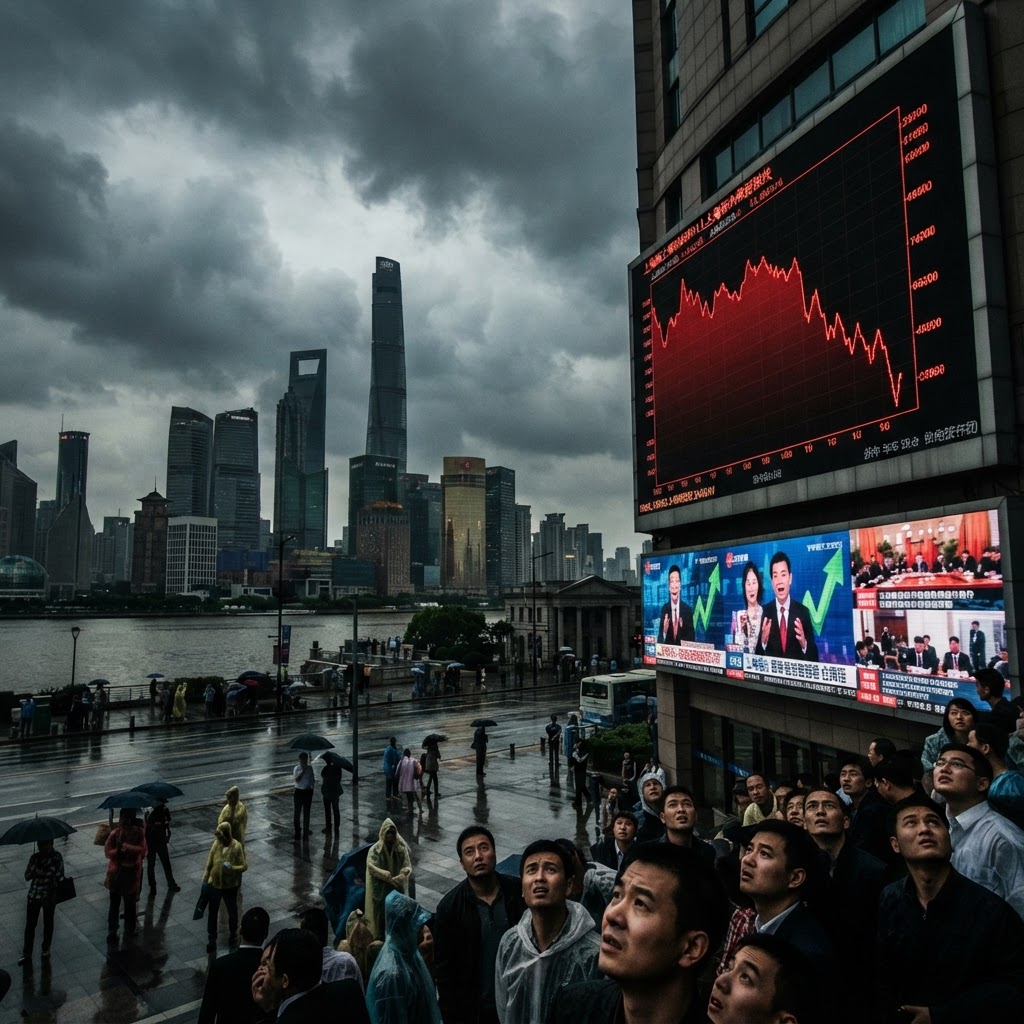
The 2015 Chinese Stock Market Crash: the state-inflated and state-burst bubble
How Chinese state media encouraged retail speculation, then the government tried in vain to stop the crash
Between June and July 2015, the Chinese stock market lost 30% in 3 weeks. The government spent over $200 billion to stop the crash. It didn't work. A unique case study of state interventionism in the stock market.
The boom fueled by state media
In 2014-2015, Chinese state media published articles describing the stock market as a patriotic opportunity. The People's Daily wrote that the bull market had just begun. Millions of small investors opened trading accounts for the first time, often buying stocks with leverage.
The Shanghai Composite rose 150% in 12 months.
The crash
On June 12, 2015, the market peaked. Then it started to decline. In three weeks, it lost 32%. The leverage that amplified the rally now amplified the decline: forced margin calls cascaded into sales.
Chinese interventionism
The government reacted with unprecedented measures: it banned short selling, imposed moratoriums on IPOs, created a $200 billion "stabilization fund" financed by state banks to buy stocks. Over 1,400 companies (half the market) suspended their shares to avoid the crash.
It didn't fully work: the market continued to lose another 30% by August.
Lessons
- State interventionism in markets has limits: even with $200 billion, the Chinese government couldn't stop the crash.
- State media encouraging speculation is a red flag: they're not neutral sources.
- Retail leverage in a bubble market is explosive: when millions of small investors buy on margin, the crash is inevitable and violent.