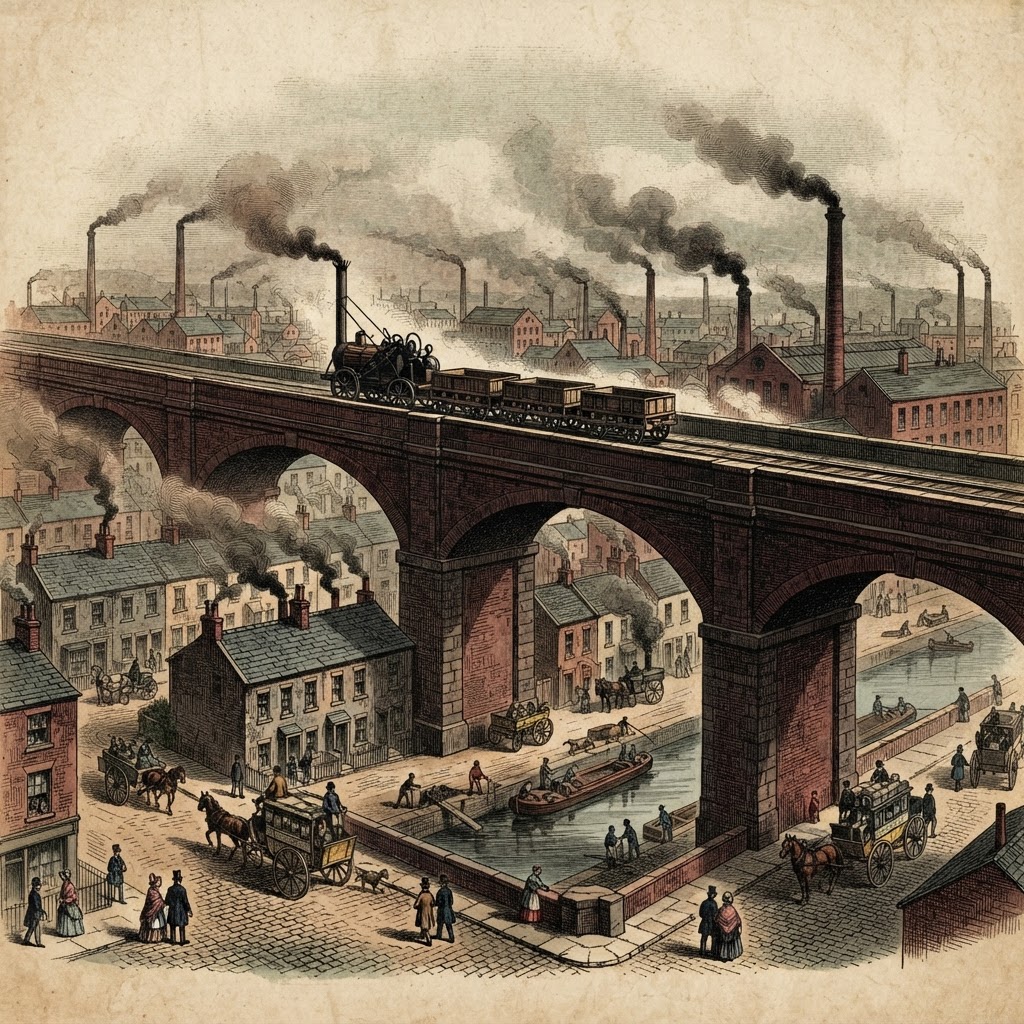
The Railway Mania 1845: the first tech bubble in industrial history
How speculation on British railways in the 1840s created a boom and bust that anticipated every subsequent tech bubble
Between 1844 and 1847, England was gripped by Railway Mania: 272 parliamentary acts for new railways, shares that tripled and then crashed 80%. The first technology bubble in history.
The transformative technology
In 1830, the Liverpool and Manchester Railway opened the world's first passenger rail line. The economic impact was immediate and revolutionary: travel times reduced 90%, freight transport costs halved. The railway was clearly the technology of the future — like the Internet in 1995.
The speculative bubble
Between 1844 and 1846, Parliament approved 272 acts for new railway construction — requiring investments of £200 million (equivalent to £30 billion today). Railway shares tripled. Every newspaper published prospectuses for new railway companies. The British middle class invested massively.
The crash
In 1847, the Bank of England raised rates to fight inflation. Credit contracted. Railway shares crashed 80%. Many companies had never laid a single mile of track. Investors who had used financial leverage lost everything.
Yet — the railways were real. The infrastructure remained. The British economy benefited for decades.
- Technology can be real while valuations are irrational: the railways were transformative — the shares were overvalued.
- Rate hikes burst bubbles: every financial bubble of the 19th and 20th centuries was terminated by monetary tightening.
- Infrastructure remains even when companies fail: as with dot-com, the railways remained even when the companies disappeared.