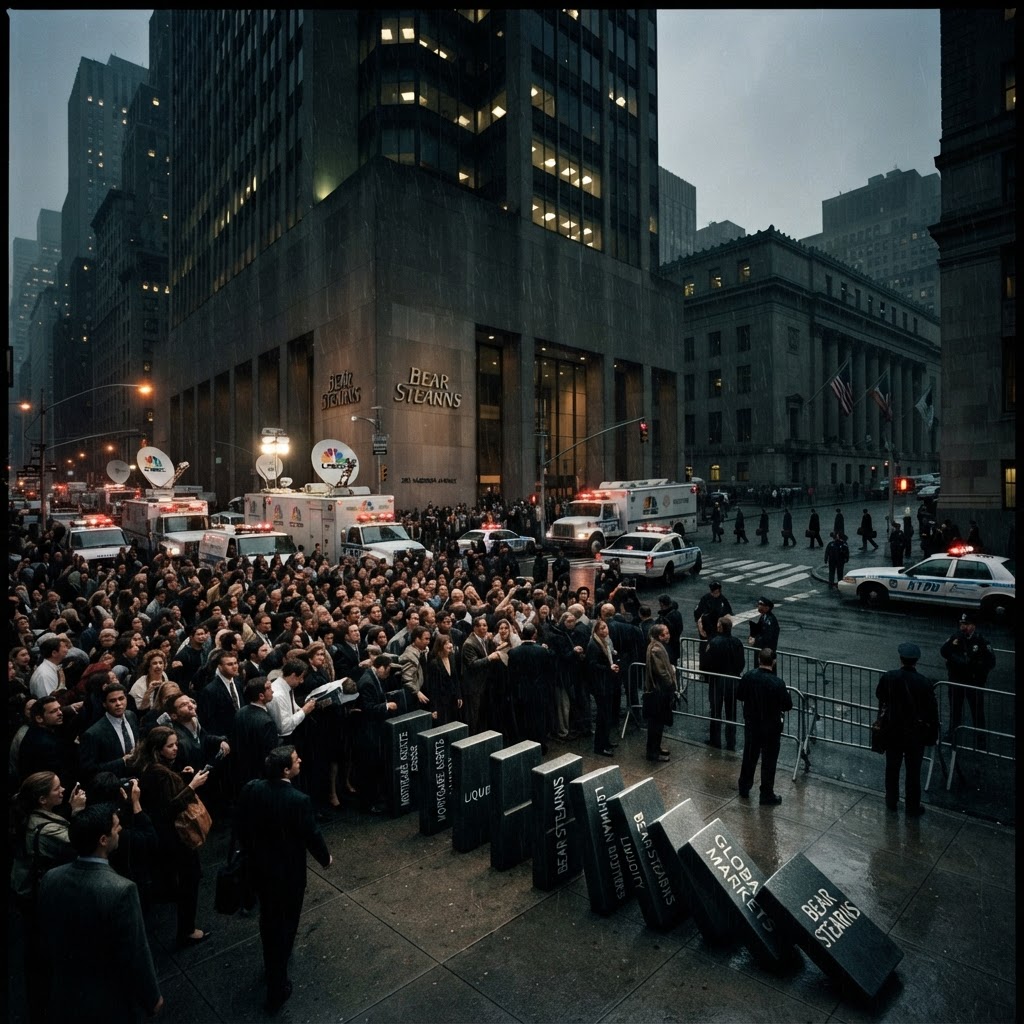
Bear Stearns: the first domino of the 2008 crisis
How the 5th-largest Wall Street broker was sold for $2 a share after a weekend of panic
In March 2008, Bear Stearns — 85 years of history, the 5th-largest US investment bank — was sold to JP Morgan for $2 a share (later renegotiated to $10) after a liquidity crisis made it insolvent in less than 72 hours.
85 years of history wiped out in a weekend
Bear Stearns was the 5th-largest US broker-dealer. In January 2007, its shares were worth $170. On March 14, 2008, the Federal Reserve urgently arranged its sale to JP Morgan at $2 a share.
How a bank dies in 72 hours
Investment banks depend on the repo market (repurchase agreements) to finance overnight positions. When counterparties started refusing to renew repos with Bear Stearns, the bank found itself without liquidity. In 72 hours, it went from "in difficulty" to "insolvent".
The Fed's role
For the first time since the Great Depression, the Federal Reserve opened its discount window to a non-bank institution. It guaranteed $29 billion in Bear Stearns' toxic assets to facilitate the sale to JP Morgan.
Lessons
- Liquidity is the lifeblood of financial markets: a company can be solvent but die from lack of liquidity.
- Trust is built over years and lost in hours: when counterparties stop trusting, the game is over.
- Counterparty risk is systemic: it's not isolated to a single institution.